
How to get pre-approval for an investment property

Published August 31, 2021

Updated May 23, 2025

Better
by Better

Front door and porch within white and pink background next to dark yellow and dark green rectangles, representing mortgage pre approval for investment property.


What You’ll Learn

What qualifies as an investment property from a lender’s perspective

Why loans for investment properties have higher interest rates

Minimum qualification requirements for investment property mortgage


Every big fish in real estate started off with just one investment property. If you’re thinking of dipping your toe in the water, it’s helpful to know exactly what qualifies as an investment property. You see, second homes can sometimes be classified as investment properties if they’re within 50 miles of your primary residence. This article isn't about property to relax in, it’s about property that works to make money.

From a lender’s point of view, there are 2 ways to make money from an investment property:

  • You plan on collecting rent or lease payments from it
  • You plan to earn a profit by flipping the property
  • What is needed to get investment property mortgage pre approval?

    If you’ve had experience buying property, you’ll soon notice that lenders ask for the same types of information to pre-approve a mortgage on an investment property as they do for a primary residence.

    At the bare minimum, a lender will want to know:

  • Your total household income
  • Your total assets
  • Your social security number
  • Lenders will use your social security number to perform a credit check to get your credit score and an idea of your credit history. At this stage, it’s likely you won't need to outline your debts because your credit reports will list the open loans and revolving credit accounts you currently have.


    Qualification requirements for investment property pre approval

    This is where you’ll find the major differences between pre-approval for a primary residence and an investment property.

    From experience, lenders know that investment properties come with an added level of risk. When borrowers hit hard times they’re more likely to pay the mortgage for their primary residence than the mortgage for their investment property. In addition, tenants are less likely to pay the same level of attention and care to a rental property than an owner would if they were living in the home. For these reasons, the qualification requirements for investment properties are higher, and so are the interest rates.

    Minimum qualification requirements for an investment property mortgage*
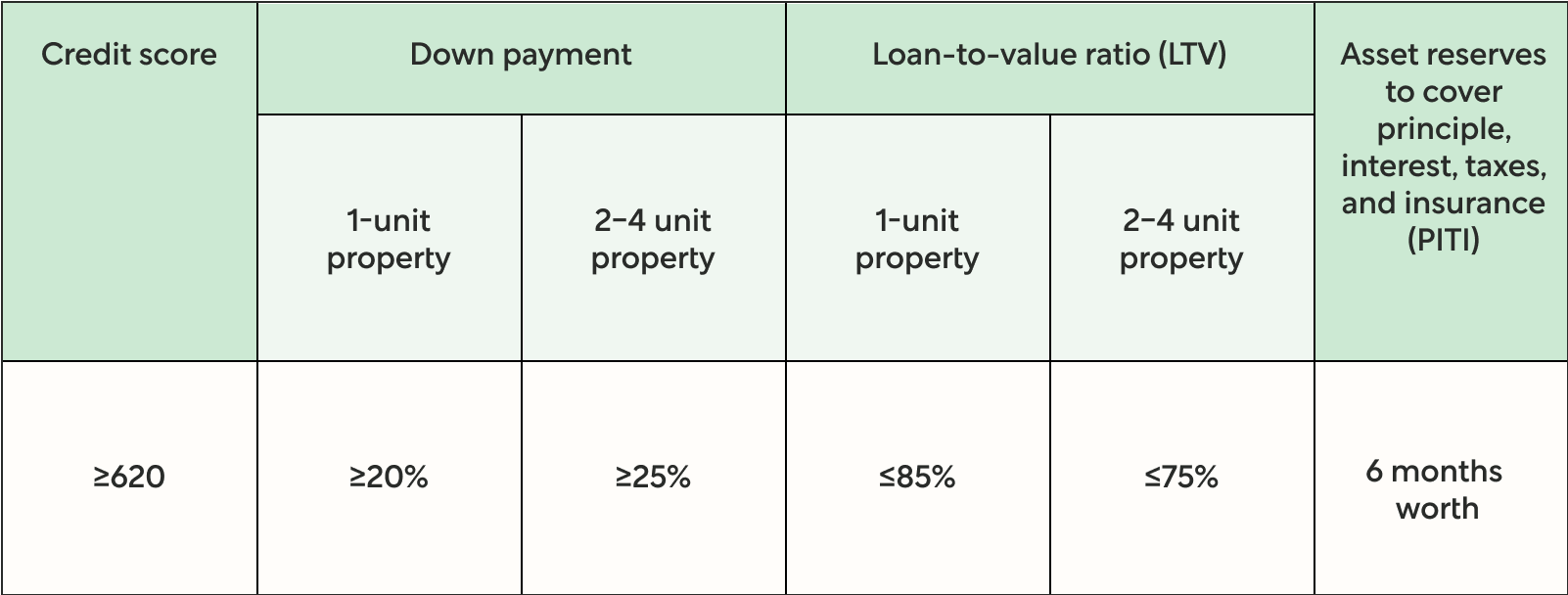
    Table detailing mortgage pre approval requirements, including minimum credit score, down payment, loan-to-value ratio, and asset reserves for covering principal, interest, taxes, and insurance, categorized by property type.

    Understanding the costs associated with investment property mortgage pre approval

    When seeking mortgage pre-approval for an investment property, it's important to account for additional costs beyond the mortgage itself. These costs can vary significantly depending on the type and location of the property, but here are a few key expenses to keep in mind:

  • Down payment requirements: Investment properties often require a higher down payment than primary residences, typically 20% to 30% of the property's purchase price.

  • Private mortgage insurance (PMI): In many cases, may not apply for investment property loans since higher down payments are required, but it's important to verify with your lender.
  • Property taxes and insurance: These can fluctuate significantly depending on the property's location. Investment properties may have higher property taxes and insurance rates than primary residences.
  • Maintenance and repair costs: Be prepared for ongoing maintenance and unexpected repairs, especially if the property is rented to tenants.
  • Property management fees: If you plan to hire a property management company, factor in their fees as part of your overall investment cost.

  • Understanding these costs will give you a clearer picture of the financial commitment and help you better plan for a successful investment property purchase.

    Mortgage pre approval is the first step to owning an investment property

    If you’re curious to see if you qualify for your first investment property loan, get pre-approved with Better Mortgage. In as little as 3 minutes, you will get an idea of how much you can borrow and what interest rates you may qualify for.


    Related posts

    HELOC pros and cons: What to know before borrowing

    Explore a home equity line of credit (HELOC) pros and cons to see if it fits your financial goals. Compare its benefits, risks, and alternatives.

    Read now

    Refinancing a mortgage: Steps, benefits & considerations

    Refinancing your mortgage can help you save money or adjust your loan terms to better suit your needs. Learn how it works and whether it’s right for you.

    Read now

    8 benefits of owning a home: Things you should consider

    Discover 8 key benefits of owning a home, from building equity to tax advantages, to make an informed buying decision.

    Read now

    Refinance appraisal higher than expected? A complete guide

    Refinance appraisal higher than expected? Understand the appraisal process, associated costs, and what it means for your refinancing options and mortgage terms.

    Read now

    Recasting a mortgage: When it makes sense and how to do it

    Learn how recasting a mortgage works, when it’s a smart move, and where it stacks up against refinancing or extra payments. Plus, discover the pros and cons.

    Read now

    What to look for when touring a home

    Touring homes is an exciting part of the home purchase journey. Here’s a guide to help you tick all the (not-so-obvious) boxes to find your dream home.

    Read now

    How much of a home loan can I get with a 650 credit score?

    Find out how much of a home loan you can get with a 650 credit score, explore your mortgage options, and see exactly what you qualify for today.

    Read now

    What is seller financing? Learn types, pros, and cons

    What is seller financing? Learn how it works, key pros and cons, and how it compares to conventional mortgages, so you can choose the best way to buy a home.

    Read now

    How much down payment for a house do you need?

    How much down payment for a house do you need? Explore typical down payment percentages, minimum requirements, and how to find the right amount for you.

    Read now

    Related FAQs

    Interested in more?

    Sign up to stay up to date with the latest mortgage news, rates, and promos.